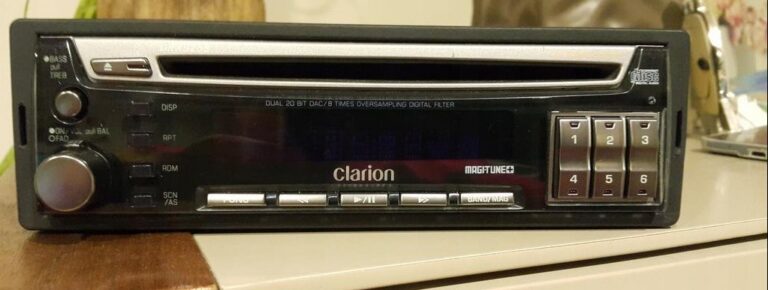
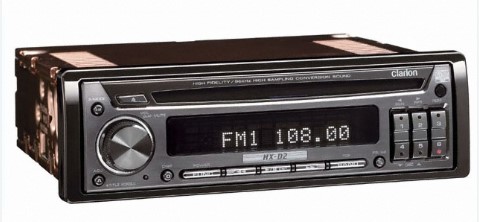
Clarion HX-D2 / DRZ9255
When a Legendary Analog Deck Went Digital
There was a time when high-end car audio was almost synonymous with analog.
A serious system meant a serious source unit, separate processors, analog crossovers, multiple amplifiers, and countless hours of tuning.
CD had already become the dominant digital source, but the rest of the system was still heavily influenced by the analog era.
Then things began to change.
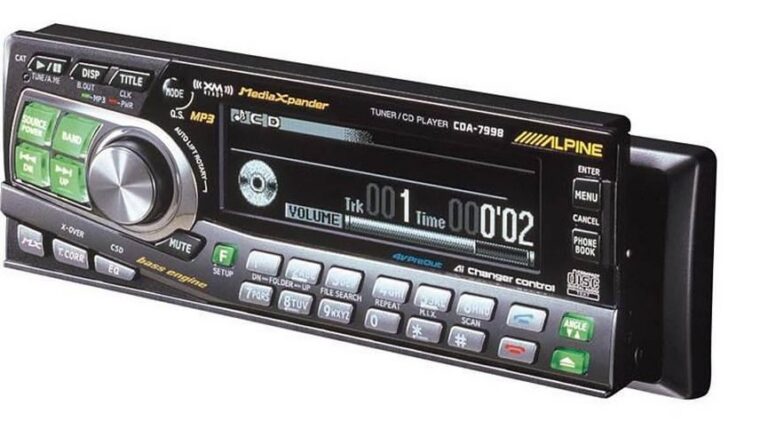
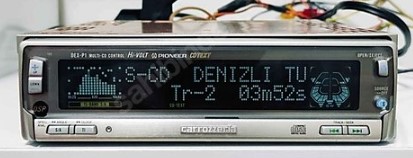
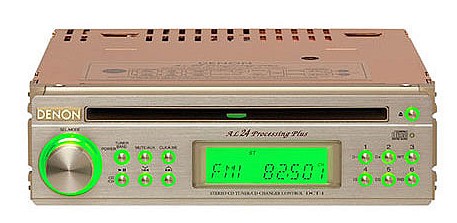
The Pioneer DEX-P1, Alpine CDA-7998R, and Eclipse CD8053 appeared with a different idea.
Why should a CD deck be nothing more than a source?
Why couldn’t the head unit itself become the center of the entire audio system?
Digital crossover.
Equalization.
Time alignment.
Multi-way system control.
These functions were beginning to move inside the head unit itself.
These products were among the pioneers of that transition.
But there was still one important problem.
Digital technology was becoming more powerful, while high-end audio was still deeply attached to the philosophy of analog sound and premium analog hardware.
And this is where Clarion’s story becomes particularly interesting.
From the Legendary DRX9255
Before the HX-D2, there was the Clarion DRX9255.
The DRX9255 had already established itself as one of Clarion’s most serious high-end CD head units.
It belonged to a generation when the source unit itself was treated as a genuine audio component.
Sound quality, signal purity, construction, and the quality of the analog audio path all mattered.
The DRX9255 represented the traditional Clarion philosophy:
Build the source properly first.
It was not trying to impress users with an enormous amount of digital processing.
Instead, it was a high-quality CD source designed for people who cared about the quality of the signal coming out of the head unit.
That philosophy became an important part of Clarion’s identity among serious car audio enthusiasts.
But the industry was changing.
Digital processing was becoming increasingly important.
Pioneer had already demonstrated what could be done with the DEX-P1.
Alpine was developing increasingly sophisticated digital system-control concepts with products such as the CDA-7998R.
Eclipse was also moving digital processing into the head unit with products such as the CD8053.
The next step for Clarion was obvious.
The philosophy of high-end analog audio had to meet the digital future.
HX-D2 — The Next Evolution
The result was the Clarion HX-D2, known as the DRZ9255 in the United States.
This is what makes the HX-D2 so interesting.
It was not simply another digital head unit.
Clarion did not abandon the philosophy that had made its high-end CD players respected.
Instead, it took that philosophy and brought it into the digital era.
Clarion presented the DRZ9255 as a product that carried forward the philosophy of the earlier DRX9255 while adding advanced digital sound-field adjustment capabilities.
That distinction is important.
The HX-D2 was not simply saying:
“Analog is old. Digital is better.”
It was asking a much more interesting question:
“What if the sound-quality philosophy of a high-end analog-era CD deck could be combined with the precise control of a digital system?”
That was the real idea behind the HX-D2.
A Different Kind of Digital Head Unit
By the time the HX-D2 appeared, digital processing itself was no longer completely new.
The real challenge was creating a digital head unit that still felt like a high-end audio component.
Clarion clearly understood this.
The HX-D2 featured a 24-bit/96kHz digital architecture, Burr-Brown DAC technology, sophisticated DSP processing, digital crossover control, parametric EQ, and digital time alignment.
It could control a multi-way speaker system directly from a single-DIN head unit.
The system could be configured with crossover points, slopes, equalization, and timing adjustments, all handled digitally.
From today’s perspective, these features may sound completely normal.
At the time, however, putting this level of processing into a single-DIN CD head unit was a very different proposition.
Four-Way Digital Crossover
One of the most important features of the HX-D2 was its digital crossover capability.
The unit could be configured for a four-way system, allowing the signal to be divided into separate frequency bands digitally.
This was a major departure from the traditional approach.
Previously, a serious multi-way system could require several pieces of external equipment just to perform the crossover functions.
With the HX-D2, much of that processing could be handled inside the head unit itself.
The source was no longer simply providing music.
The head unit was actually creating the signals that would eventually be sent to each amplifier and speaker.
The architecture of the car audio system itself was beginning to change.
Time Alignment Becomes Part of the Source
Then there was digital time alignment.
This was another important step.
Inside a car, the listener is sitting at different distances from each speaker.
The driver’s-side tweeter may be very close, while the opposite speaker can be considerably farther away.
In a traditional analog system, correcting these differences precisely was difficult.
Digital processing changed that.
The HX-D2 could adjust the timing of individual channels so that the arrival time of the sound could be controlled.
Today, we simply call this time alignment.
Back then, however, it was one of the features that made digital car audio so exciting.
The head unit was no longer simply reproducing music.
It was beginning to reconstruct the acoustic relationship between the speakers and the listener.
That was a fundamentally different approach from the traditional analog source.
Yet Clarion Still Cared About the Hardware
This is where the HX-D2 separated itself from some of the earlier digital decks.
The Pioneer DEX-P1, Alpine CDA-7998R, and Eclipse CD8053 had already demonstrated that a CD head unit could become a sophisticated digital system controller.
But the HX-D2 took another step.
Clarion wanted the digital head unit to feel like a serious high-end audio component.
The company paid considerable attention to the physical hardware.
The unit incorporated a substantial chassis design, copper-plated construction elements, high-quality DAC components, and an external DC/DC power supply.
That was significant.
Clarion was not treating digital processing as a reason to ignore the traditional fundamentals of high-end audio.
Power supply quality still mattered.
The analog output stage still mattered.
The DAC still mattered.
The physical construction still mattered.
Digital processing was not replacing the high-end philosophy.
It was being added to it.
The Difference Between the CD8053 and HX-D2
This creates a very interesting comparison with the Eclipse CD8053.
Both products were sophisticated digital head units capable of advanced system control.
But their personalities in the market were quite different.
The CD8053 had a more practical image.
In Korea, in particular, it was often seen as a relatively affordable way to build a digital multi-way system.
Its technology was impressive, but its physical presentation did not necessarily communicate luxury.
The HX-D2 was almost the opposite.
Clarion emphasized both sides of the equation.
Digital processing on the inside.
High-end audio hardware on the outside.
It was not simply a convenient digital multi-way deck.
It was intended to be a serious high-end source.
That distinction is extremely important.
The Old-School High-End World Was Changing
At this point, the entire car audio industry was entering a transition.
The traditional formula was something like:
CD Player → Analog Processor → Analog Crossover → Amplifiers → Speakers
The new formula was gradually becoming:
CD Player → Digital Processing → Amplifiers → Speakers
The number of external components could be reduced.
The signal path could be controlled digitally.
Crossover points could be adjusted precisely.
Time alignment could be applied.
Equalization could be performed for individual channels.
And the entire system could be controlled from a single-DIN head unit.
The HX-D2 represented one of the most sophisticated expressions of this idea.
But It Was Still a CD Player
There is something important that is easy to forget today.
The HX-D2 was created at a time when the CD was still essential.
Today, many people rarely listen to CDs.
Music comes from streaming services, smartphones, digital files, and network sources.
Some modern cars do not even have a CD drive.
But when the HX-D2 was developed, the situation was completely different.
If you wanted a high-quality digital source in your car, the CD was one of the most important options available.
There was no Spotify.
No Apple Music.
No smartphone connected directly to a DSP.
The CD was the digital source.
So Clarion took the CD player that people still needed and transformed it into something much more sophisticated.
The CD mechanism remained at the center.
But surrounding it was an advanced digital processing system.
The CD deck was becoming a DSP.
From Source to System Brain
This was the real evolution.
The Pioneer DEX-P1 had already shown that a CD deck could become a digital system controller.
The Alpine CDA-7998R represented another approach to integrating advanced processing into a premium head unit.
The Eclipse CD8053 pushed the concept toward practical digital multi-way system control.
And then the Clarion HX-D2 combined that direction with the traditional philosophy of a high-end Clarion source.
This is why the HX-D2 deserves a special place in old-school car audio history.
It was not simply another digital deck.
It was a bridge between two generations.
The analog high-end generation that produced products such as the DRX9255…
and the digital DSP generation that would eventually become the standard.
The Japanese Way of Solving the Problem
There is also something very Japanese about the approach taken with the HX-D2.
Instead of throwing away the old philosophy and starting again, Clarion evolved it.
The company did not simply say:
“Digital is the future, so forget everything about analog.”
Instead:
Keep the high-end source.
Keep the quality power supply.
Keep the serious analog output stage.
Keep the premium construction.
Then add digital processing.
That approach produced something unusual.
A CD deck capable of sophisticated DSP processing while still being designed like a serious high-end audio component.
That combination is what made the HX-D2 special.
The U.S. Name: DRZ9255
For enthusiasts and collectors outside Japan and Asia, there is another important detail.
The HX-D2 was marketed as the DRZ9255 in the United States.
So when searching for information, manuals, or used equipment, both model names are important.
HX-D2 = DRZ9255
They belong to the same product family, with regional differences such as tuner specifications.
This is particularly useful today because searching only for “HX-D2” can cause you to miss a significant amount of information about the American-market DRZ9255.
The Last Great 1-DIN Digital CD Decks
What makes the HX-D2 so fascinating today is its timing.
It arrived when the traditional 1-DIN CD head unit was reaching something close to a technological peak.
The physical format was still familiar.
One DIN slot.
One CD mechanism.
A conventional dashboard installation.
But inside that familiar box was an increasingly sophisticated digital audio computer.
That is the strange beauty of this generation of equipment.
It looked like a CD player.
But it was becoming much more.
A DSP.
A crossover.
An equalizer.
A time-alignment processor.
A system controller.
And a high-end digital source.
All inside a single DIN slot.
Looking Back at the P1, 7998R, 8053 and HX-D2
When these products are viewed together, the story becomes much clearer.
The Pioneer DEX-P1, Alpine CDA-7998R, and Eclipse CD8053 were pioneers.
They appeared at a time when most high-end systems were still strongly influenced by analog equipment.
They demonstrated that the CD head unit itself could become part of the digital processing chain.
But they were still products from a period of transition.
Not everyone understood how to use them.
Some enthusiasts simply used them as high-quality CD players.
Others continued to rely on external analog crossovers and processors.
The potential of digital multi-way processing was already there, but the culture and techniques required to fully exploit it were still developing.
Then came the HX-D2.
Clarion had a clear advantage.
It already had a strong reputation for high-end CD sources.
It had the heritage of the DRX9255.
So instead of simply creating a digital deck focused on functionality, Clarion could take its existing high-end philosophy and move it into the digital age.
The result was a 1-DIN deck that combined two worlds.
When a Legendary Analog Deck Went Digital
This is ultimately why the HX-D2 is such an important product.
It was not the first product to put digital processing into a CD head unit.
Pioneer, Alpine, and Eclipse had already been exploring that direction.
But Clarion approached the problem from a different starting point.
The world of high-end analog CD sources.
And the philosophy established by the DRX9255.
The idea that the source itself mattered.
Clarion did not abandon that philosophy.
It carried it into the digital era.
And the result was the HX-D2.
A high-end CD source with the brain of a DSP system.
That is a much more interesting description than simply calling it a “digital head unit.”
The End of the CD Era Was Also the Beginning of the DSP Era
Today, we may look at a CD deck and simply see obsolete technology.
But that would miss the bigger picture.
The important part was not the CD itself.
What mattered was what manufacturers began doing around it.
They started processing the digital source digitally.
They integrated crossovers.
They added equalization.
They introduced time alignment.
They created multi-way control.
And they gradually turned the head unit into the brain of the entire system.
The CD eventually disappeared.
But the architecture remained.
Modern DSP systems are a continuation of that idea.
And the HX-D2 sits at an important point in that transition.
It was created for the CD era.
But it was already thinking about the DSP era.
A Legacy That Is Easy to Miss
The HX-D2 may not have the same instant recognition today as some of the legendary Alpine, Pioneer, or Sony products.
But among enthusiasts who understand old-school digital car audio, it deserves another look.
It represents something that is becoming increasingly rare:
the final evolution of the 1-DIN high-end CD deck.
A familiar physical format.
A CD mechanism that was still necessary.
A high-end analog philosophy inherited from the previous generation.
And a digital processor that was already pointing toward the future.
All of it combined into one unit.
That is why the HX-D2 is more than just another old CD player.
It represents the moment when the traditional high-end CD deck finally learned to think digitally.
And perhaps that is the best way to remember it.
Pioneer DEX-P1 showed the possibility.
Alpine CDA-7998R pushed the concept forward.
Eclipse CD8053 made digital multi-way control more practical.
And Clarion HX-D2 took the philosophy of a legendary high-end analog source and brought it into the digital age.
The CD was still necessary.
But the future was already inside the deck.
When a legendary analog deck went digital, this was what it looked like.
— K Sound Gear