Sony XES-Z50 — The Digital Reference Sound System That Redefined High-End Car Audio
Sony XES-Z50 – Digital Reference Sound System
Introduction
The Sony XES-Z50 is one of the most interesting high-end car audio systems of the 1990s. Introduced in 1996, the XES-Z50 was designed as part of Sony’s flagship XES Digital Reference Sound System.
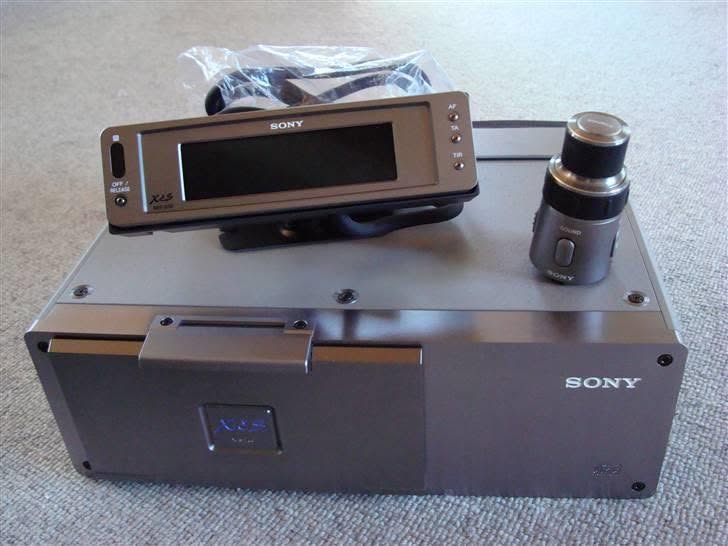
Unlike a conventional car stereo with a built-in CD mechanism, the XES-Z50 uses a separate CD changer and a dedicated control unit. The system was designed around digital signal processing, active crossover control, and high-quality separate amplification.
For its time, the XES-Z50 represented an ambitious approach to high-end automotive audio.
System Concept
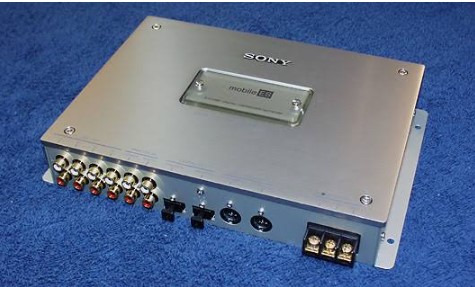
The XES-Z50 is more accurately described as a digital control unit / digital preamp rather than a conventional head unit.
The system separates the major functions into dedicated components:
CD Changer → XES-Z50 Control Unit → XES Amplifiers → Speakers
The CD changer handles disc playback, while the control unit performs signal management, equalization, crossover processing, source selection, and volume control.
This modular architecture was unusual for a car audio system in the mid-1990s.
Key Specifications
| Specification | Sony XES-Z50 |
|---|---|
| Introduction | 1996 |
| System | XES Digital Reference Sound System |
| Type | Digital Control Unit / Digital Preamp |
| Digital Processing | 20-bit |
| Frequency Response | 5 Hz – 20 kHz |
| Signal-to-Noise Ratio | 106 dB |
| Dynamic Range | 110 dB |
| THD | 0.002% |
| Channel Separation | 100 dB |
| Equalizer | 12-band Parametric EQ |
| EQ Resolution | 1/18 octave |
| EQ Range | ±12 dB |
| Crossover | Active 3-way |
| Inputs | Analog / Digital |
| Outputs | Front / Rear / Subwoofer |
These specifications were extremely ambitious for a 1996 automotive audio system.
20-bit Digital Architecture
One of the defining features of the XES-Z50 is its digital signal-processing architecture.
Sony specified 20-bit digital processing and published performance figures including a 106 dB signal-to-noise ratio, 110 dB dynamic range, and 0.002% THD.
The system was designed to keep the signal in the digital domain during important stages of processing rather than relying entirely on conventional analog processing.
The CD digital signal and external digital sources could be processed by the system before being distributed to the amplifier channels.
12-band Parametric Equalizer
The XES-Z50 includes a sophisticated 12-band parametric equalizer.
Unlike a basic graphic equalizer with fixed frequency bands, the parametric EQ allows much more precise control of the audio response.
The equalizer provides:
- 12 independent bands
- 1/18-octave adjustment
- ±12 dB adjustment range
This level of adjustment allowed the system to compensate for the acoustic characteristics of a vehicle interior.
Considering that the XES-Z50 was introduced in 1996, its level of digital equalization was remarkably advanced.
Active 3-Way Crossover
The XES-Z50 was designed to control a multi-amplifier, multi-way system.
Its active crossover section allows the audio signal to be divided into low, mid, and high frequency sections.
The crossover frequencies include several selectable points between the low and mid sections, as well as between the mid and high sections.
The system also provides multiple crossover slopes, including very steep slopes of up to 72 dB/octave.
This made it possible to build a fully active 3-way system without relying exclusively on passive speaker networks.
Low, Mid and High Frequency Control
The crossover architecture provides separate control over the major frequency ranges.
The low-frequency section can be directed toward the subwoofer or low-frequency amplifier, while the mid and high sections can be sent to their respective amplifier channels.
This approach allowed the XES system to use dedicated amplification for different sections of the speaker system.
The result was a system architecture much closer to a high-end home audio setup than a conventional 1990s car stereo.
Digital and Analog Inputs
The XES-Z50 was not limited to digital sources.
The system provides both analog and digital audio inputs, allowing it to work with different source components.
This was important because digital sources were still relatively limited in automotive audio during the mid-1990s.
The XES-Z50 therefore provided a bridge between conventional analog sources and Sony’s digital processing architecture.
Separate CD Changer
Unlike a conventional head unit, the XES-Z50 control unit does not contain the CD mechanism.
The CD changer is a separate component in the XES system.
This separation allowed Sony to dedicate the control unit to signal processing and system control while keeping the disc mechanism physically separate.
The CD changer was considerably larger and heavier than the control unit, reflecting the high-end construction philosophy of the XES system.
Control Unit
The XES-Z50 control unit measures approximately:
178 × 50 × 170 mm
and weighs approximately:
1.9 kg
Despite its relatively compact size, the control unit contains the electronics necessary for digital signal processing, equalization, crossover control, source management, and audio output.
The system could also be operated using dedicated remote controllers.
A Different Approach to Car Audio
The XES-Z50 is interesting because Sony did not simply try to make a more powerful car stereo.
Instead, Sony approached the problem from a system-design perspective.
The basic concept was:
Digital Source → Digital Processing → Active Crossover → Separate Amplification → Dedicated Speakers
This architecture is very familiar to modern DSP-based car audio enthusiasts.
However, the XES-Z50 was introduced in 1996, long before sophisticated digital processors became common in mainstream car audio.
Was the XES-Z50 a Head Unit?
Calling the XES-Z50 a “head unit” is understandable, but technically it is better described as a Digital Control Unit or Digital Preamp.
The CD playback function is handled by the separate CD changer.
The XES-Z50 is primarily responsible for controlling and processing the audio signal.
For this reason, the complete XES-Z50 system should be considered a modular high-end source and processing system rather than a conventional single-box head unit.
Sound and System Character
The XES-Z50 was designed with system accuracy and control in mind rather than simply producing a particular “Sony sound.”
Its digital processing architecture, parametric EQ, and active crossover allowed the installer to tune the system to the vehicle and speaker configuration.
The final sound therefore depended heavily on the amplifier, speakers, installation, crossover settings, and tuning.
This is one of the reasons the XES-Z50 remains interesting to old-school car audio enthusiasts today.
Historical Significance
The Sony XES-Z50 represents an important period in the development of high-end car audio.
During the 1990s, manufacturers were experimenting with increasingly sophisticated digital processing, separate components, active crossovers, and high-quality digital sources.
The XES-Z50 combined many of these technologies into a single high-end system.
Its architecture demonstrates how Sony envisioned the future of premium automotive audio in the mid-1990s.
Many of the concepts found in the XES-Z50 are now standard in modern DSP-based systems:
- Digital signal processing
- Parametric EQ
- Active crossover
- Separate amplification
- Multiple dedicated audio channels
- Digital source integration
K Sound Gear Perspective
The Sony XES-Z50 is more than an old CD-based car stereo.
It is a snapshot of Sony’s vision for high-end digital car audio in the 1990s.
Its separate CD changer, digital control unit, 20-bit processing, 12-band parametric EQ, and active 3-way crossover demonstrate how advanced the high-end car audio market had already become by 1996.
For collectors and enthusiasts of old-school car audio, the XES-Z50 remains one of the most interesting examples of Sony’s high-end engineering philosophy.
K Sound Gear Rating
Era: 1990s
System Type: High-End Digital Car Audio
Architecture: Modular
Processing: Digital
EQ: 12-Band Parametric
Crossover: Active 3-Way
Historical Significance: ★★★★★
Collector Interest: ★★★★★
Conclusion
The Sony XES-Z50 should not be viewed simply as a vintage head unit.
It was designed as the control center of an advanced modular digital car audio system, combining digital processing, precision equalization, and active crossover control with separate source and amplification components.
More than 25 years later, the XES-Z50 remains a fascinating example of how far high-end car audio technology had progressed during the 1990s.