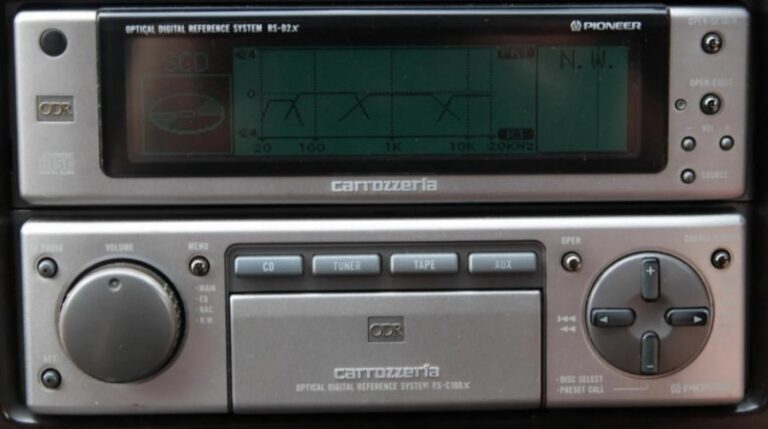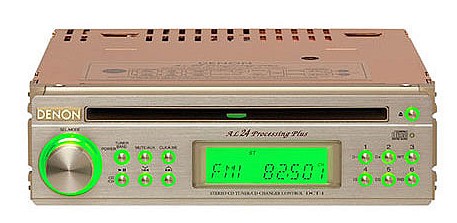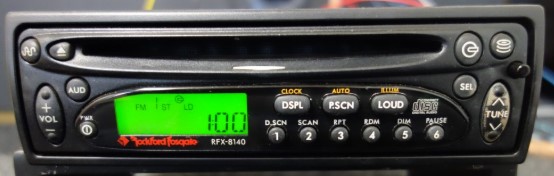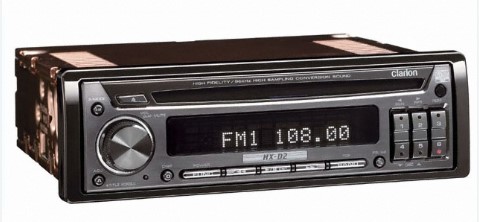
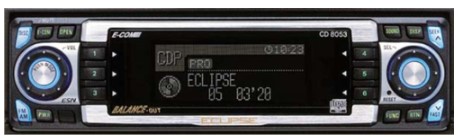
Eclipse CD8053
The Digital Head Unit That Was Better Inside Than It Looked
There are many ways to look back at the classic car audio equipment of the 1990s and early 2000s.
Some products are remembered because of their beautiful construction.
Some became legends because of their sound.
Others are remembered simply because they were expensive and difficult to obtain.
And then there are products like the Eclipse CD8053.
The CD8053 is interesting for a different reason.
It was a technologically advanced digital head unit, but its reputation was never quite as prestigious as its actual capabilities might suggest.
In Korea, especially, it was not necessarily regarded as one of the glamorous high-end source units of its era.
Instead, it became known more as a relatively affordable and practical digital multi-way head unit.
That is a somewhat ironic position for a product with such sophisticated digital system-control capabilities.
To understand why, we have to look at the product itself, but also at the car audio culture of the time.
Eclipse Had More Than One Personality
When people think about Eclipse today, it is easy to imagine the brand as one unified high-end car audio manufacturer.
But within the Eclipse lineup, there were products with very different personalities.
The Sound Monitor series is a good example.
Sound Monitor had a much more traditional high-end audio character.
The products looked serious.
The construction had a premium feel.
The design and materials communicated the idea that the source itself was an important part of a high-end audio system.
You could look at a Sound Monitor unit and immediately understand what it was trying to be.
It looked like expensive audio equipment.
The CD8053 was different.
It was not designed primarily around that kind of luxury image.
Its strongest point was the technology hidden inside the unit.
The CD8053 was a digital system-control platform as much as it was a CD player.
That difference is extremely important when trying to understand how the product was perceived in Korea.
A High-End Head Unit Was Supposed to Look High-End
Back then, the physical appearance of a head unit mattered much more than it does today.
The chassis material mattered.
The weight mattered.
The quality of the front panel mattered.
The buttons and controls mattered.
Even the texture and feel of the metal could influence how enthusiasts judged the product.
A serious high-end head unit was expected to feel like a serious piece of audio equipment.
Some manufacturers went much further than simply making a functional chassis.
They used heavy metal construction and, on some premium products, copper-based chassis designs and other materials that immediately gave the impression of something special.
The physical hardware itself became part of the product’s identity.
The CD8053 did not really have that kind of personality.
Compared with some of the more luxurious high-end decks of the period, its chassis and overall physical presentation felt relatively ordinary.
It did not have the kind of massive, exotic construction that made people want to pick it up and examine it simply because of the hardware.
That was important.
Because in the old-school car audio world, the product had to look expensive before many people were willing to believe that it was expensive.
The Era of Flashy Head Units
There was another problem for the CD8053.
The period in which it appeared was also the era of extremely flashy car audio head units.
Even high-priced head units with built-in amplification could have elaborate graphics, colorful displays, animated screens, motorized mechanisms, numerous buttons, and complicated interfaces.
Some of them looked almost like miniature pieces of consumer electronics from the future.
They were designed to impress the owner every time the ignition was turned on.
You could sit in the driver’s seat and immediately see where the money had gone.
The CD8053 was much more restrained.
It did not try to win the visual competition with huge graphics or an extravagant dashboard presence.
Its design was more functional.
More technical.
More focused on what the unit could actually do.
That made perfect sense from an engineering perspective.
But it also meant that a customer looking at the unit in a shop could easily come away with the impression that it was much cheaper than it really was.
And this was one of the reasons the CD8053 struggled to create the same emotional high-end image as some of its competitors.
Better Technology Than Appearance
This is probably the most accurate way to describe the CD8053.
It was better inside than outside.
The physical appearance did not immediately communicate high-end status.
But the technology inside was considerably more interesting.
The CD8053 was designed around digital signal processing and system control.
It could be used to create a multi-way system, with digital crossover functions, equalization, and time alignment.
The head unit was no longer simply responsible for playing a CD and sending out a preamp signal.
It could become the center of the entire speaker system.
That was a major change.
And at the time, it was still a relatively new way of thinking.
The Head Unit Was Becoming the Brain
For many years, a serious car audio system was built by adding more equipment.
A good source unit fed an equalizer.
The equalizer fed a crossover.
The crossover fed multiple amplifiers.
Each amplifier drove a particular speaker or speaker group.
If you wanted more control, you added another processor.
This was the traditional analog approach.
The CD8053 represented a different direction.
Instead of continuing to add external hardware, more of the system-control functions were moved into the head unit itself.
The source was becoming a processor.
The processor was becoming the network controller.
And the head unit was becoming the brain of the entire system.
That concept is completely normal today.
At the time, it was a significant change.
Digital Multi-Way System Control
The real appeal of the CD8053 was therefore not its appearance.
It was what could be done with it once it was installed into a properly designed system.
The unit offered digital processing capabilities that allowed the user to configure a multi-way system and control important aspects of the signal path.
Instead of relying entirely on external analog crossovers, the system could be configured digitally.
Equalization could be performed inside the unit.
Time alignment could be used to compensate for the different distances between the speakers and the listener.
The concept was fundamentally different from the traditional analog system.
And that difference would eventually become the foundation of modern DSP car audio.
But Korea Was Still Deeply Analog
This is where the story becomes especially interesting.
In Korea, the car audio scene of the time was still strongly influenced by analog equipment.
A serious enthusiast might have multiple pieces of equipment installed in the trunk.
External equalizers.
Analog crossovers.
Multiple amplifiers.
Separate processors.
And a great deal of time spent adjusting everything manually.
There was a culture surrounding this equipment.
The hardware itself was part of the hobby.
Seeing a beautifully installed rack of expensive equipment could be almost as satisfying as listening to it.
The head unit in the dashboard was equally important.
It was the face of the entire system.
So a product that looked expensive and felt expensive had a strong advantage.
The CD8053 approached the problem differently.
It reduced the need for additional equipment by putting more processing capability into the head unit.
Technically, that was a very smart solution.
Emotionally, however, it was not necessarily what the Korean high-end market was looking for.
Why the CD8053 Became a “Digital Multi” Deck
This is one of the most important parts of the Korean story.
The CD8053 could be used to build a sophisticated digital multi-way system without requiring the same amount of external processing equipment.
That made it attractive.
Especially for enthusiasts who wanted to experiment with digital processing without spending enormous amounts of money on a complete collection of high-end processors.
But that same advantage affected its reputation.
Instead of becoming known primarily as a prestigious audiophile source, the CD8053 became associated with being a practical digital multi-way deck.
It was useful.
It was flexible.
It could do a lot.
And it was relatively accessible.
Those are all positive characteristics.
But in the high-end market, they can also work against a product.
Because “good value” and “high-end luxury” are not necessarily the same thing.
The Problem With Being Too Practical
This is the strange irony of the CD8053.
Its practicality may have worked against its prestige.
A customer who wanted a glamorous high-end system might look at a luxurious source unit with a substantial chassis and immediately feel that it belonged in an expensive installation.
The CD8053 required a different kind of appreciation.
You had to understand what was happening inside.
You had to understand digital multi-way processing.
You had to know how to use the system.
And, most importantly, you had to hear the results after the system had been properly configured.
The value of the product was not obvious from the dashboard.
It had to be experienced.
That made it much easier to underestimate.
Sound Monitor and CD8053 Were Not the Same Kind of Product
This is why the difference between the Sound Monitor series and the CD8053 is so important.
They came from the same Eclipse family, but they represented different philosophies.
Sound Monitor was closer to the traditional idea of a high-end source.
The physical product itself was part of the attraction.
The construction mattered.
The appearance mattered.
The exclusivity mattered.
The CD8053 was much more functional.
Its value was in the digital processing.
Its value was in the system flexibility.
Its value was in the ability to build a sophisticated multi-way system around a single head unit.
You could almost describe the two philosophies this way:
Sound Monitor:
“This is a high-end audio component.”
CD8053:
“This is a tool for building a high-end audio system.”
Those are very different ideas.
And in Korea, the first philosophy generally had stronger emotional appeal.
The CD8053 Was Not the Glamorous One
This is also why it is important not to rewrite history and pretend that the CD8053 was universally regarded as a legendary high-end source.
It wasn’t.
At least not in the Korean market.
It had a relatively modest physical presence.
Its chassis did not have the exotic feeling associated with some of the more expensive high-end products.
And compared with the spectacular graphics and elaborate designs of many expensive head units from the same period, the CD8053 could look almost ordinary.
That was a real part of its identity.
It was not the product that people necessarily bought because they wanted the most impressive-looking head unit in the dashboard.
It was the product people could choose because they wanted digital multi-way capability.
That distinction matters.
A Product That Was Ahead of Its Appearance
The interesting thing is that the CD8053 was already moving toward a concept that would become completely normal years later.
Today, a DSP is expected to handle:
- Crossover control
- Equalization
- Time alignment
- Multi-way speaker configuration
- Signal routing
- System tuning
Nobody finds this unusual.
But during the CD8053 era, many enthusiasts were still doing much of this with separate analog equipment.
The CD8053 was therefore part of a major transition.
It was taking functions that had traditionally been distributed across several pieces of hardware and putting them into a single digital platform.
The concept was simple:
Why keep adding boxes when the head unit can do the job itself?
That was the direction the industry was beginning to take.
The Connection With Pioneer DEX-P1
This is where the CD8053 becomes even more interesting when placed alongside the Pioneer DEX-P1.
The DEX-P1 represented an early stage of this transition.
Pioneer was already putting digital network functions into a 1-DIN CD head unit and allowing the head unit itself to participate in multi-way system control.
The CD8053 came from the same broader movement.
Different manufacturer.
Different design philosophy.
Different market position.
But the direction was similar.
The head unit was becoming more than a CD player.
It was becoming the digital control center of the car audio system.
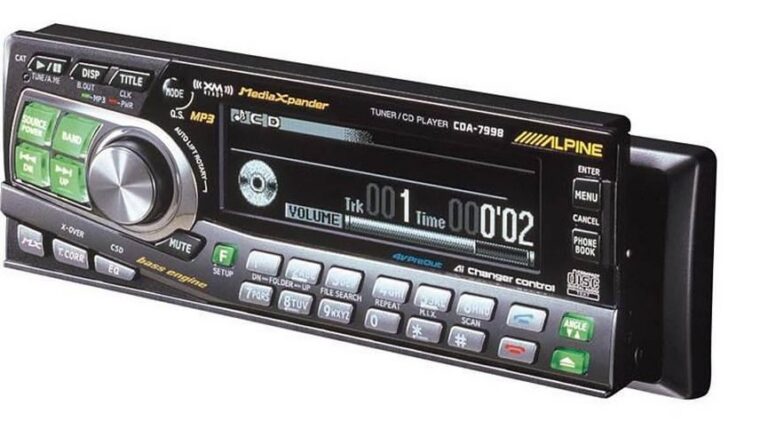
And Then There Was Alpine 7998
The Alpine 7998 is another important part of this story.
At the time, the idea of putting DSP-related functionality directly into a high-end CD deck was still relatively new.
Pioneer, Alpine, and Eclipse were approaching the problem in their own ways.
But they were all moving toward the same fundamental idea:
The CD deck did not have to be just a source.
It could also become part of the processing chain.
It could control the speaker system.
It could perform functions that previously required separate processors.
And this was happening at exactly the time when the CD was becoming the dominant digital source for car audio.
The CD Was Still Essential
This is something that is easy to forget today.
Modern listeners may have little reason to use a CD.
Music is streamed.
Music is stored on smartphones.
Digital files are played directly.
Many modern vehicles do not even include a CD drive.
But the world of the DEX-P1, Alpine 7998, and Eclipse CD8053 was completely different.
The CD was necessary.
If you wanted a high-quality digital source in your car, the CD was one of the most important options available.
There was no Spotify.
No Apple Music.
No smartphone connected directly to a DSP.
No high-resolution streaming service built into the dashboard.
The CD was the digital source.
So the head unit had to be a CD player.
That is why these products are so interesting.
They did not abandon the CD.
Instead, they took the CD player that people already needed and transformed it into something much more sophisticated.
From CD Player to Digital System Controller
The Pioneer DEX-P1, Alpine 7998, and Eclipse CD8053 came from different companies and had different reputations.
But they shared an important idea.
They were CD decks that were beginning to think like DSP processors.
The CD remained at the center.
But around that CD mechanism, manufacturers were adding digital processing capabilities.
Crossover control.
Equalization.
Time alignment.
Multi-way network control.
Digital signal processing.
Functions that had once required separate external equipment were beginning to move into the head unit.
This was a major change in car audio architecture.
The head unit was no longer simply where the music started.
It was becoming the place where the entire system was controlled.
Why Some People Did Not Appreciate Them at the Time
This also explains something that happened with products like the P1 and 8053.
The technology was ahead of the culture.
Many enthusiasts understood how to build an analog system.
They knew how to select an analog crossover.
They knew how to adjust an EQ.
They knew how to tune amplifier gains.
But digital network systems required a different way of thinking.
Some people simply used these expensive digital decks as high-quality CD players.
Others connected external analog crossovers and continued to build their systems in the traditional way.
And when they did not hear a dramatic improvement, they sometimes concluded that the new digital deck was overrated.
In reality, they may simply not have been using the feature that made the product special.
That is one of the most interesting things about this generation of equipment.
The equipment was changing faster than the way people used it.
The Irony of the CD8053
The CD8053 therefore occupies a strange position in old-school car audio history.
It was not the most luxurious source.
It did not have the same visual prestige as the Sound Monitor series.
It did not have the spectacular appearance of some expensive built-in-amplifier decks.
And in Korea, it was often associated with affordable digital multi-way systems rather than elite high-end installations.
Yet technically, it represented exactly the kind of architecture that would later become standard.
It was moving the industry toward the idea of the head unit as a digital system controller.
Its technology was arguably more important than its image.
And that is why the CD8053 is worth revisiting today.
Better Inside Than Outside
Perhaps the simplest way to describe the Eclipse CD8053 is this:
It was better inside than outside.
Its appearance did not immediately communicate luxury.
Its chassis did not have the same exotic appeal as certain premium high-end units.
Its graphics were not designed to compete with the most spectacular head units of the era.
And in Korea, its reputation became closely associated with being a practical digital multi-way deck.
But once you understood what it could actually do, the picture changed.
It was a sophisticated digital platform that could become the center of a multi-way system.
It belonged to a generation of products that were quietly changing the architecture of car audio.
And perhaps that is why the CD8053 is more interesting today than it was when it was new.
The Last Great CD Decks Were Already Building the DSP Future
The Pioneer DEX-P1, Alpine 7998, and Eclipse CD8053 were not identical products.
They came from different manufacturers and had different personalities.
But together, they represent an important moment in car audio history.
They were products from the CD era that were already pointing toward the DSP era.
At the time, the CD was still essential.
A high-quality car audio system needed a digital source, and that source was usually a CD.
But these manufacturers were already asking a much bigger question:
What else can the CD deck do?
The answer was increasingly clear.
It could control the crossover.
It could manage the equalization.
It could correct the timing.
It could divide the signal into multiple speaker channels.
It could become the digital brain of the system.
And that idea would eventually become completely normal.
Today, we may not even use CDs anymore.
But the architecture created around those CD players is still very much alive.
Modern DSP systems are the descendants of that idea.
A CD Player That Was Looking Beyond the CD
That is perhaps the best way to remember the DEX-P1, Alpine 7998, and Eclipse CD8053.
They were designed for a world in which the CD was essential.
But they were already thinking beyond the CD.
They took a source that people needed and transformed it into a system controller.
They helped move car audio away from the idea of adding more and more analog boxes and toward the idea of concentrating processing inside a digital platform.
It was not always understood at the time.
It was not always appreciated.
And in the case of the CD8053, its relatively ordinary appearance and affordable digital multi-way image may have actually worked against its reputation.
But looking back from today, the direction is obvious.
The future of car audio was already there.
It was hiding behind the faceplates of CD decks.
And that is what makes the old-school digital head units so fascinating.
They were built to play CDs.
But they were already thinking like DSPs.
**The CD era was not simply the end of analog car audio.
It was also the beginning of the digital system that we use today.**
— K Sound Gear