Pioneer RS-D2X
The Beginning of ODR
When Pioneer Took High-End Car Audio Into the Digital Age
There was a time when car audio was almost entirely analog.
Large amplifiers, analog crossovers, equalizers, RCA cables and carefully installed speakers defined the serious car audio system.
Then, in 1993, Pioneer changed the direction of high-end car audio.
The company introduced Carrozzeria X, a completely different approach to building a reference-level system inside a vehicle.
At the center of this new philosophy was digital signal transmission, digital processing and precise control of the sound field.
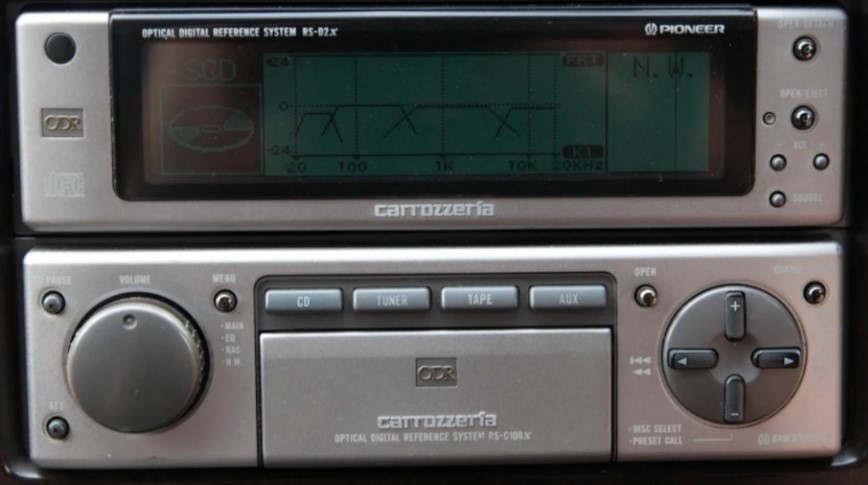
And one of the most important pieces to emerge from that era was the Pioneer RS-D2X.
1993 — A New Direction
The story actually began in September 1993.
Pioneer introduced the first Carrozzeria X components, including the RS-K1X, RS-P1X, RS-P50X, RS-A1X and RS-A2X, along with the matching X-series speakers and system controllers.
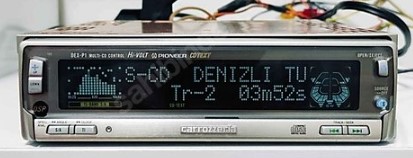
Then, in December 1993, Pioneer added the RS-D2X System Control Tuner CD.
The RS-D2X was not simply another CD head unit.
It was designed from the beginning as part of a completely different high-end audio system.
Pioneer was moving away from the traditional analog approach and toward a system in which the audio signal could remain digital much further through the signal chain.
This was the beginning of what Pioneer would later describe as the ODR — Optical Digital Reference philosophy.
A CD Player Built for Sound Quality
The RS-D2X was equipped with a single-disc CD player.
But Pioneer wasn’t interested in making it a conventional automotive CD receiver.
The company designed the CD section with sound quality as the priority.
Most importantly, the CD signal could be sent out directly in digital form, avoiding unnecessary conversion back into analog at this stage.
For modern digital audio users, that may not sound revolutionary.
In 1993, it was a very different story.
The typical car audio system was still dominated by analog signal paths.
The idea of keeping the signal digital and controlling the system digitally was still extremely unusual.
Pioneer was essentially asking a new question:
What if we treated the car audio system more like a digital reference system from the very beginning?
Why Optical Digital?
The answer was the car itself.
A vehicle is an extremely difficult environment for high-quality audio.
There are alternators, ignition systems, motors, computers and countless electrical devices operating around the audio system.
Pioneer recognized that conventional analog signal cables could be vulnerable to noise in this environment.
Even coaxial digital connections could create concerns about electrical interference.
Optical transmission offered a different solution.
Because the signal was transmitted as light rather than an electrical connection, the optical link was isolated from many of the electrical noise problems found inside a vehicle.
Pioneer later explained that this was one of the key reasons it adopted optical digital transmission as part of the ODR concept.
The name itself says it all:
Optical Digital Reference.
Time Alignment — In 1993
Perhaps the most remarkable part of the story is not simply digital transmission.
It is what Pioneer did with the digital signal.
The Carrozzeria X system introduced time alignment as part of its sound-field control technology.
Pioneer explains that the RS-D2X and RS-A1X introduced this technology in 1993 as part of the ODR philosophy.
Think about that for a moment.
Today, time alignment is a standard feature in many DSP-equipped car audio systems.
You enter speaker distances into a processor.
The DSP calculates delays.
The sound stage can be pulled forward and centered around the driver’s listening position.
But in 1993, this was anything but normal.
Pioneer was already approaching the car as an acoustic environment that needed to be digitally corrected.
That idea would become one of the defining characteristics of high-end digital car audio.
The Car Was No Longer Just a Place to Install Speakers
This was a major change in philosophy.
Traditional car audio often concentrated on the components themselves.
Better speakers.
Better amplifiers.
Better cables.
Better crossovers.
But Pioneer began looking at the entire vehicle as an acoustic system.
The location of every speaker mattered.
The distance between the speakers and the listener mattered.
The timing of the signal mattered.
And the electrical environment of the vehicle mattered.
The goal was no longer simply to make the system louder.
It was to create a convincing stereo image inside an environment that was never designed for stereo reproduction in the first place.
That is a very modern idea.
Yet Pioneer was working on it more than three decades ago.
The RS-D2X Was Part of Something Bigger
The RS-D2X was never intended to work alone.
It belonged to the original Carrozzeria X ecosystem.
The 1993 lineup included components such as the RS-P50X digital preamplifier, RS-P1X digital equalizer, RS-A1X and RS-A2X amplifiers, and a range of X-series speakers.
But the RS-D2X occupies an interesting position in that system.
It was the source.
The place where the music entered the digital architecture of the system.
From there, the signal could be processed and controlled without immediately returning to a conventional analog signal path.
That was the fundamental idea behind the system.
A Different Kind of High-End
The RS-D2X also shows how different the definition of “high-end” was becoming.
The old-school approach had been about massive hardware.
Large amplifiers.
Heavy power supplies.
Huge speakers.
Physical construction.
The new approach was beginning to add something completely different:
Digital control.
Instead of solving every problem with bigger hardware, Pioneer began solving problems with signal processing.
That transition would eventually change the entire car audio industry.
And the RS-D2X appeared right at the beginning of that transition.
Built in an Era of Hardware
There is still something fascinating about the RS-D2X today.
It belongs to an era when digital technology was just entering serious automotive audio.
There were no smartphone apps.
No touchscreen DSP interfaces.
No automatic tuning.
No convenient software-based setup.
The technology was digital, but the hardware was unmistakably old-school.
The result is a product that sits somewhere between two generations of car audio.
It has the physical presence and engineering philosophy of classic Japanese high-end hardware.
But inside that philosophy is the beginning of the digital future.
The Beginning of ODR
Pioneer later described the basic specifications established during the development of Carrozzeria X as the foundation of its ODR — Optical Digital Reference philosophy.
The concept combined two major ideas:
High-quality digital signal transmission
and
digital control of the vehicle’s acoustic environment.
Those two ideas would continue to develop through later Carrozzeria X generations.
The RS-D2X was only the beginning.
Later products would become more sophisticated, eventually leading to famous models such as the RS-D7X and later generations of ODR equipment.
But the philosophy was already there.
Looking Back
Today, digital signal processing is everywhere in car audio.
Time alignment is common.
Digital crossovers are common.
Optical inputs are common.
DSP tuning is common.
But in 1993, putting these ideas together in a high-end automotive system was something very different.
That is why the RS-D2X deserves to be remembered.
It wasn’t simply an expensive Japanese CD player.
It represented a change in thinking.
Car audio was no longer only about hardware.
It was becoming a system.
A digital system.
And Pioneer was one of the companies that helped define that transition.
K Sound Gear Perspective
The RS-D2X is interesting because it represents a completely different side of old-school car audio.
The AVI BSM-160 represents the old philosophy of serious physical hardware — large magnets, substantial voice coils and carefully engineered mechanical components.
The RS-D2X represents what came next.
Digital control.
Optical transmission.
Time alignment.
Signal processing.
Two completely different approaches, both born from the same pursuit:
better sound inside a car.
More than 30 years later, the RS-D2X still feels surprisingly modern.
Not because it has modern features.
But because the ideas behind it became the foundation of modern high-end car audio.
1993.
Pioneer Carrozzeria X.
The beginning of ODR.
And the moment car audio started moving from the analog world into the digital age.