Phoenix Gold Reactor – The Nuclear-Themed Six-Channel Limited Edition
Phoenix Gold Reactor – The Nuclear-Themed Six-Channel Limited Edition
Introduction
The Phoenix Gold Reactor is one of the most unusual and collectible amplifiers ever produced by Phoenix Gold.
Rather than being designed simply as another high-power amplifier, the Reactor was created as a special limited-edition model with an unmistakable industrial and nuclear-reactor theme.
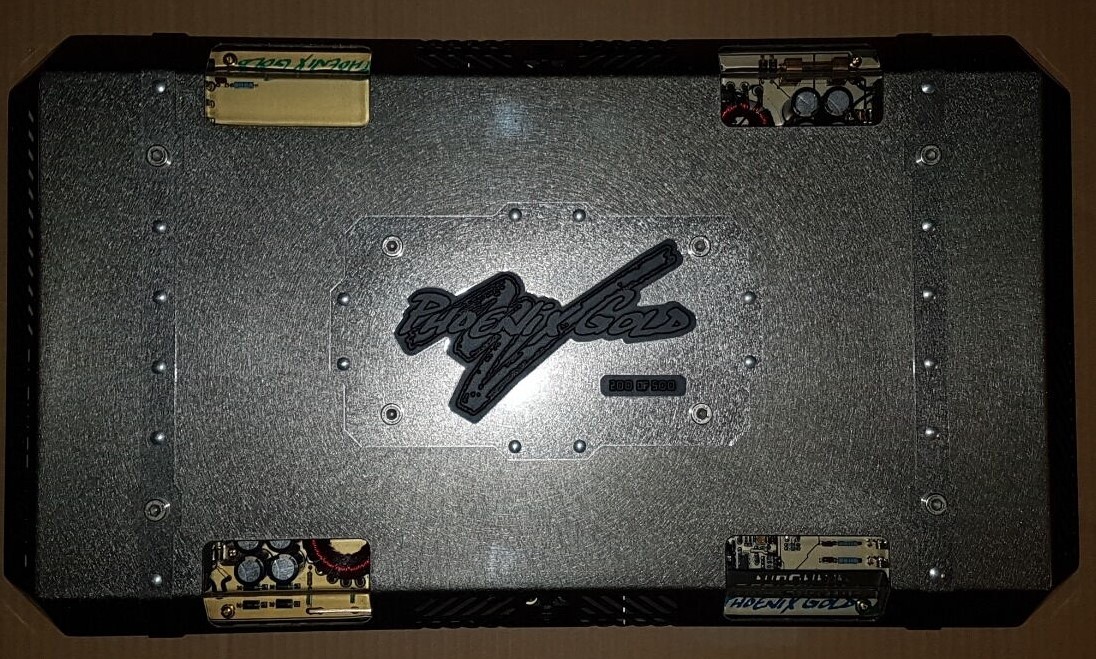
Only 500 units were produced, and each amplifier was individually numbered. The Reactor featured a custom metal chassis with riveted construction, brushed metal surfaces, illuminated internal components, and a distinctive nuclear-reactor-inspired design.
It was also far more than a visual statement.
Under the large chassis, Phoenix Gold combined two of its powerful ZX-series amplifiers to create a six-channel amplification system.
A Unique Concept
The Reactor was based on two Phoenix Gold amplifiers integrated into a single chassis:
- ZX450
- ZX500
The ZX450 section provides four channels of amplification, while the ZX500 section provides two high-power channels.
This creates a total of six amplifier channels in one chassis.
The concept was particularly interesting for high-end car audio systems because the amplifier could potentially handle the majority of a complete system from a single enclosure.
The four-channel section could be used for front and rear speakers or an active multi-way system, while the two high-power channels were ideally suited to subwoofer duty.
Six Channels in One Chassis
The Reactor’s six-channel architecture can be divided into two sections.
Four-Channel Section
The ZX450-based section provides:
4Ω Stereo: 75 watts × 4
2Ω Stereo: 150 watts × 4
4Ω Bridged: 300 watts × 2
Two-Channel Subwoofer Section
The ZX500-based section provides:
4Ω Stereo: 150 watts × 2
2Ω Stereo: 300 watts × 2
4Ω Bridged: 600 watts × 1
These specifications make the Reactor much more interesting than a conventional six-channel amplifier.
The amplifier effectively combines a four-channel full-range section with a high-power two-channel section in one chassis. (Phoenix Gold FAQ)
Designed for a Complete System
One of the most interesting aspects of the Reactor is its ability to function as the foundation of a complete car audio system.
The four-channel section could be used to drive a front and rear system, or it could be configured for an active multi-way setup.
The two-channel ZX500 section was designed for substantially higher power and was well suited for subwoofer applications.
This made the Reactor particularly attractive to enthusiasts who wanted a powerful system without installing multiple separate amplifiers.
The concept also reflects the engineering philosophy of Phoenix Gold during the 1990s: high current capability, substantial power, and flexible system configuration.
Built Around the ZX Series
The Reactor was not developed as an entirely new amplifier platform.
Instead, Phoenix Gold integrated the ZX450 and ZX500 amplifier designs into a custom chassis.
This approach allowed Phoenix Gold to combine proven amplifier technology with a highly distinctive limited-edition design.
The result was something unusual even by the standards of 1990s high-end car audio.
The Reactor was essentially a complete amplifier system disguised as a single enormous amplifier.
Industrial Design
The Reactor’s appearance is one of its most recognizable characteristics.
The chassis was intentionally designed around a nuclear reactor theme.
It featured:
- Brushed metal construction
- Industrial-style rivets
- Large heatsink structure
- Illuminated internal components
- Side ventilation openings
- Phoenix Gold branding
- Individual serial/build numbering
The illuminated interior was particularly dramatic.
Purple/blue illumination could be seen through the side ventilation openings, giving the amplifier the appearance of an actual industrial reactor.
The design was clearly intended to be displayed rather than hidden away in a trunk. (Phoenix Gold FAQ)
Individually Numbered
Only 500 Reactor amplifiers were produced.
Each unit received its own individual production number, engraved on the top cover beneath the Phoenix Gold logo.
This makes the Reactor significantly different from a normal mass-production amplifier.
Collectors can identify individual units by their numbers, and surviving examples are often referred to by their production number, such as:
#200 of 500
The Phoenix Gold Reactor registry also records individual examples and their production numbers. (Phoenix Gold Registry)
The Flight Case
Phoenix Gold continued the nuclear theme beyond the amplifier itself.
The Reactor was supplied in a custom flight case, designed to resemble equipment associated with the transportation of hazardous or nuclear materials.
The case was yellow and featured warning-style markings.
This was an unusual approach for a car audio amplifier and helped make the Reactor a complete collector’s package rather than simply an amplifier.
For collectors today, the original flight case can be an important part of a complete Reactor set.
Crossovers
The Reactor includes built-in crossover functionality.
The crossover frequency range is approximately:
30 Hz – 600 Hz
with slopes of up to:
24 dB/octave
This provides useful flexibility for configuring the amplifier for full-range speakers, midbass, or subwoofer applications. (Phoenix Gold FAQ)
Cooling
Because of the Reactor’s power capability and compact integration of two amplifiers into one chassis, thermal management was an important part of the design.
The Reactor uses dual active cooling fans.
The fans help move air through the large amplifier chassis and assist in maintaining stable operating temperatures during high-power operation.
This is particularly important when the amplifier is used at low impedance or when the high-power subwoofer section is heavily loaded.
Bass Control and System Features
The Reactor was designed with several features intended for high-end installations.
Available features included:
- Variable input sensitivity
- RCA inputs and outputs
- Remote diagnostic display connection
- Optional remote bass level control
- Variable bass boost
- Built-in crossover controls
- Dual cooling fans
The bass boost section was centered around approximately 45 Hz and could provide up to 18 dB of boost. (Patreon)
Physical Size
The Reactor is a very large amplifier.
Its approximate dimensions are:
25 × 14 × 2.5 inches
or roughly:
635 × 356 × 64 mm
The large chassis was necessary to accommodate two amplifier sections, their power supplies, cooling system, and substantial heatsinking.
This is one of those amplifiers where the physical size is part of the experience.
Why Six Channels?
The Reactor is particularly interesting when viewed from the perspective of 1990s system design.
At the time, many high-end installations used multiple separate amplifiers.
A typical system might require:
Amplifier 1 → Front speakers
Amplifier 2 → Rear speakers
Amplifier 3 → Subwoofers
The Reactor offered another approach:
One large amplifier → Six channels
The four-channel section could handle the main speaker system while the two high-power channels could handle the subwoofer section.
For an enthusiast building a high-output system, this could significantly simplify the installation.
The Reactor and Old-School Phoenix Gold
The Reactor belongs to an era when Phoenix Gold was willing to experiment with highly unusual amplifier designs.
Phoenix Gold produced several limited-edition and special-production amplifiers during this period, including models such as the Outlaw, Bandit, Reactor, and later special projects.
The company itself describes the Reactor as one of its limited-edition amplifiers and lists 500 units produced. (Phoenix Gold)
The Reactor therefore represents more than just a high-power amplifier.
It represents the period when car audio manufacturers treated amplifiers as both serious engineering products and statement pieces.
Sound and Performance
The Reactor’s sound should not be judged simply by its power ratings.
The ZX-series architecture was designed around Phoenix Gold’s high-current amplifier philosophy, and the Reactor combined that technology with substantial power reserves.
The four-channel section is particularly interesting for active systems because its four channels can be used independently.
Meanwhile, the ZX500-based section provides significantly more power for subwoofer applications.
The result is an amplifier capable of supporting both the detailed front stage and the high-current demands of a subwoofer system.
Collector Value
Today, the Reactor occupies an unusual position in the vintage car audio market.
It is simultaneously:
- A high-performance amplifier
- A limited-production Phoenix Gold model
- A six-channel amplifier
- A piece of 1990s industrial design
- A collectible special-edition product
- A historically important Phoenix Gold amplifier
The fact that only 500 were produced makes surviving examples relatively uncommon.
Complete examples with the original flight case, documentation, and matching accessories are particularly interesting to collectors.
What Makes the Reactor Special?
There are many powerful amplifiers from the 1990s.
There are also many limited-edition amplifiers.
There are far fewer that combine both ideas with such an extreme design.
The Phoenix Gold Reactor combines:
Six channels
High-current amplifier architecture
Dedicated high-power subwoofer section
Active cooling
Built-in crossover
Industrial metal chassis
Nuclear-reactor styling
Individual numbering
Only 500 units produced
Custom flight case
That combination makes the Reactor one of the most distinctive Phoenix Gold amplifiers ever produced.
K Sound Gear Perspective
The Phoenix Gold Reactor is a perfect example of what makes old-school car audio fascinating.
Modern amplifiers are generally designed around efficiency, compact dimensions, and extremely high power density.
The Reactor represents a very different philosophy.
It was large, heavy, visually dramatic, mechanically elaborate, and unapologetically excessive.
But that excess was part of the appeal.
Phoenix Gold did not simply build a six-channel amplifier.
They built a piece of car audio history.
Specifications
Model: Phoenix Gold Reactor
Type: Limited-Edition Six-Channel Amplifier
Amplifier Architecture: ZX450 + ZX500
Production: 500 units
Channels: 6
Four-Channel Section
4Ω: 75 W × 4
2Ω: 150 W × 4
4Ω Bridged: 300 W × 2
Subwoofer Section
4Ω: 150 W × 2
2Ω: 300 W × 2
4Ω Bridged: 600 W × 1
Other Features
Crossover Range: 30 Hz – 600 Hz
Crossover Slope: Up to 24 dB/octave
Bass Boost: Up to +18 dB at approximately 45 Hz
Cooling: Dual active fans
Dimensions: Approximately 25 × 14 × 2.5 inches
Special Feature: Individually numbered limited edition
Original Packaging: Custom flight case
Conclusion
The Phoenix Gold Reactor is not simply another vintage car audio amplifier.
It is one of the clearest examples of the creativity and excess that defined the golden era of American car audio.
By combining a ZX450 and ZX500 into one enormous six-channel chassis, Phoenix Gold created an amplifier capable of powering a substantial portion of a complete car audio system.
Add the industrial chassis, illuminated interior, nuclear-reactor theme, individual numbering, and limited production of only 500 units, and the Reactor becomes something much more significant than its specifications alone suggest.
**The Phoenix Gold Reactor is not just an amplifier.
It is a piece of old-school car audio history.**
K Sound Gear Rating
Engineering: ★★★★★
Power: ★★★★★
System Flexibility: ★★★★★
Design: ★★★★★
Rarity: ★★★★★
Historical Significance: ★★★★★
Collector Appeal: ★★★★★